

April 5, 2026
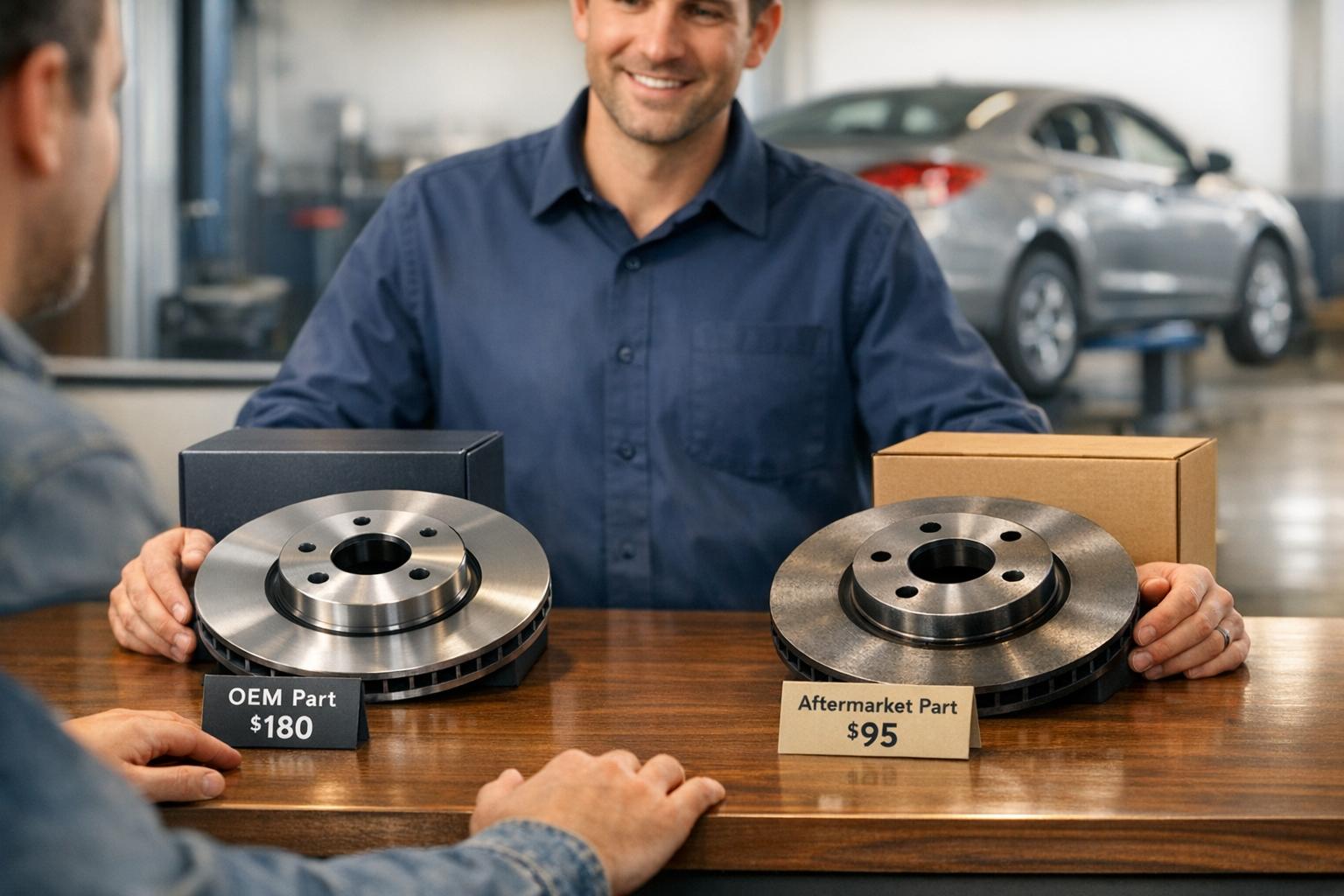
When repairing your vehicle, you’ll need to choose between OEM (Original Equipment Manufacturer) and aftermarket parts. Here’s what you need to know:
Key stats:
Your decision should balance cost, safety, and your vehicle’s value. OEM parts suit newer or leased cars, while aftermarket parts work well for older vehicles or non-critical repairs.

OEM vs Aftermarket Auto Parts: Cost, Quality & Safety Comparison
Understanding the distinction between OEM and aftermarket parts can help you make smarter decisions about vehicle repairs, balancing cost and performance. Here's what you need to know about each type.
OEM (Original Equipment Manufacturer) parts are identical to the components that came with your car when it rolled off the assembly line. These parts are produced either by the automaker itself or by its approved suppliers. As automotive expert Mia Bevacqua from RepairPal points out, OEM parts provide a precise fit and dependable performance.
For example, Bosch produces fuel injectors that meet Volkswagen's original factory standards, while ACDelco, a subsidiary of General Motors, manufactures OEM spark plugs specifically for GM vehicles. To add peace of mind, most automakers back their OEM parts with a one-year warranty.
Aftermarket parts, on the other hand, are made by third-party manufacturers rather than your car's original maker. These components are designed to fit a variety of vehicles and often come with a much lower price tag - sometimes up to 50% less.
For example, AutoZone, a major retailer with 7,657 stores, generated $18.9 billion in revenue in 2025 by selling aftermarket parts. Retailers use tools like electronic catalogs and diagnostic software to ensure compatibility with specific vehicles. However, the quality of aftermarket parts can vary significantly. Budget-friendly options like Valucraft cater to cost-conscious buyers, while premium brands such as Duralast Gold offer higher performance.
Some aftermarket parts also carry CAPA (Certified Automotive Parts Association) certification, which guarantees they meet strict safety and quality standards. This wide range of choices makes aftermarket parts a flexible option for various repair needs.
This sets the foundation for exploring cost comparisons in the following section.
The cost difference between OEM (Original Equipment Manufacturer) and aftermarket parts can make a noticeable dent in your repair expenses. For instance, replacing front brake pads for a 2020 Honda Accord costs $89.99 for OEM parts, while premium aftermarket options are priced at $54.99 - a savings of 39%. Similarly, an OEM air filter costs $24.99 compared to $15.99 for an aftermarket version, saving 36%. For bigger-ticket items, the gap widens: an OEM alternator is $349.99, but a premium aftermarket alternative is only $189.99, resulting in a 46% savings.
These examples highlight that aftermarket parts typically cost between 50% and 80% of OEM prices. For non-critical components like side mirror housings or plastic fender liners, aftermarket parts often save you 60% to 70% while maintaining safety standards. If you're dealing with multiple part replacements after an accident, these savings can quickly add up. Let’s explore what drives these price differences.
The price disparity between OEM and aftermarket parts boils down to several key factors.
One major reason is manufacturing standards. OEM parts are made using the exact molds, materials, and production processes as the original factory components, ensuring a flawless fit. Aftermarket parts, however, are reverse-engineered, which can result in minor deviations of 1–3 mm.
Brand reputation and distribution channels also contribute to the cost. OEM parts are branded by the vehicle manufacturer and sold exclusively through authorized dealerships, which often include a markup. In contrast, aftermarket parts are distributed through competitive retail networks that maintain larger inventories, enabling faster delivery - even same-day shipping - while OEM parts might be on backorder.
Another factor is technology integration. Modern vehicles often incorporate ADAS (Advanced Driver Assistance Systems) sensors into body parts. For these components, OEM parts are designed with exact bracket angles and material densities to ensure proper functionality. Aftermarket parts might require additional calibration, which can add complexity.
| Factor | OEM Parts | Aftermarket Parts |
|---|---|---|
| Price | Base Price (100%) | 50%–80% of OEM |
| Fit | Perfect Match (100%) | 1–3 mm deviations possible |
| Warranty | Factory (12 months/12,000 miles) | Varies by brand; some offer lifetime |
| ADAS Support | Native compatibility | Possible calibration risks |
| Availability | May require dealer order | Widely available; fast shipping |
| Resale Value Impact | Maintains 10–15% higher value | Minimal impact or slight decrease |
Knowing the pros and cons of OEM parts can help you balance repair costs with long-term value.
OEM (Original Equipment Manufacturer) parts are built to the same specifications as the original components in your vehicle, ensuring a perfect fit and consistent performance. These parts are made using the same materials and standards as those used during the car's original manufacturing process, which means you're essentially getting the same quality as when the car was new.
One of the standout advantages of OEM parts is their safety. Unlike many aftermarket alternatives, OEM parts are crash-tested for safety-critical performance. This is especially important for structural components and body panels designed to protect you in the event of an accident. If you drive a leased or luxury vehicle, OEM parts are also key to maintaining its value.
Another big perk is their impact on your factory warranty. Using OEM parts ensures that your warranty coverage remains intact, which can be a major plus for ongoing vehicle protection. When dealing with advanced systems like ADAS (Advanced Driver Assistance Systems) or other safety-sensitive electronics, OEM parts guarantee compatibility and proper functionality. As Adesa Auto Body puts it:
"OEM parts are made to perfectly fit your specific vehicle make and model".
These factors make OEM parts a smart choice for those prioritizing safety, quality, and preserving vehicle value, even if they come with a higher price tag.
The biggest drawback of OEM parts is their cost. They are typically 20% to 60% more expensive than aftermarket alternatives. For instance, a new OEM alternator for some car models can cost over $700, while aftermarket or remanufactured options range from $180 to $500. In areas with sales tax - like Cuyahoga County's 8.0% rate - the price gap becomes even more noticeable.
Another issue is availability. OEM parts often need to be specially ordered, which can lead to longer wait times. This can be frustrating if you rely on your car daily. For vehicles no longer under warranty, the steep price of OEM parts may not be justifiable, especially since many aftermarket parts now come with competitive warranties.
Understanding the trade-offs of aftermarket parts is key to making smart decisions when it comes to vehicle repairs.
One of the biggest draws of aftermarket parts is their affordability. These parts can cost up to 50% less than OEM parts, potentially saving car owners over $2.2 billion annually on repair expenses. Think of them like generic medications - they offer similar functionality but at a fraction of the price.
Another advantage is their widespread availability. Unlike OEM components, which are often restricted to specific dealerships and may require special orders, aftermarket parts can be found at numerous retailers. This can lead to quicker repairs and less time waiting for your vehicle to be road-ready. Plus, the variety of brands and price points gives you more flexibility to choose what fits your budget and needs.
For owners of older vehicles, aftermarket parts can sometimes be the only option. And thanks to the Magnuson-Moss Act, using these parts won't void your warranty. On top of that, insurers often favor the use of these lower-cost parts, which could translate into savings on your repair bills.
While aftermarket parts have their perks, they also come with some challenges - especially when it comes to quality. As Investopedia points out:
"While the quality of some aftermarket parts may be questionable, most parts are equal to, if not better than, OEM parts".
However, the quality can vary significantly depending on the manufacturer. This inconsistency might affect how long your repair lasts or even compromise safety.
Rachel See of Elevated Auto Body highlights this concern:
"While aftermarket parts might seem like a cost-effective option, they can compromise the safety and longevity of your repair".
Another consideration is the warranty. Aftermarket parts often have shorter warranties or, in some cases, no warranty at all, unlike the manufacturer-backed guarantees that come with OEM parts. For critical safety components, the lack of uniform testing standards can also raise concerns.
These factors underline the importance of carefully weighing your options when deciding between aftermarket and OEM parts.
| Feature | OEM Parts | Aftermarket Parts |
|---|---|---|
| Cost | Higher | Up to 50% cheaper |
| Availability | Limited; usually through dealers | Widely available |
| Fit & Compatibility | Perfect, tailor-made fit | Potential for gaps or misalignment |
| Quality | Consistent, factory-standard | Variable; ranges from superior to poor |
| Warranty | Manufacturer-backed | Often shorter or none; varies by brand |
| Safety Testing | Rigorously tested | Testing standards vary |
| Best For | Leased/luxury vehicles, critical safety components | Older vehicles, cosmetic repairs, budget-conscious repairs |
Your decision between OEM and aftermarket parts boils down to factors like warranty, safety, vehicle age, and cost - topics we've explored earlier.
If preserving your factory warranty and resale value is a priority, OEM parts are a safe bet. While the Magnuson-Moss Act ensures manufacturers can't void warranties just because you use aftermarket parts, sticking with OEM components can help you avoid potential disputes.
OEM parts, especially critical ones like airbags and collision sensors, are built to meet strict factory standards. Even slight differences in aftermarket alternatives can affect how these parts function as part of your vehicle's safety system, making OEM the smarter choice for repairs that impact safety.
For luxury or leased vehicles, OEM parts are often the preferred route. Buyers and lessees value cars restored with factory-original components, so using OEM parts can make a difference when it comes to resale or lease agreements.
If your car is older or you're working with a tight budget, aftermarket parts can be an affordable and reliable alternative. For discontinued vehicle models, aftermarket parts might even be your only option since OEM parts may no longer be produced.
Cosmetic repairs, like replacing a bumper cover, side mirror, or headlight housing, are ideal situations for aftermarket parts. Insurance companies often favor these parts to keep repair costs down, but you can always choose OEM parts if you're willing to cover the price difference.
Regardless of the situation, getting expert advice can make the decision-making process easier.
Both OEM and aftermarket parts have their advantages, and having professional guidance makes all the difference. At Franklin Auto Body in Boise, Idaho, their I-CAR GOLD CLASS technicians are ready to help you navigate these choices based on your warranty, safety needs, and budget.
Proper installation is key to ensuring your selected parts perform as intended. Franklin Auto Body ensures every part is installed, aligned, calibrated, and tested according to manufacturer repair standards. They also assist with insurance claims, helping you understand your coverage and when insurers might cover OEM versus aftermarket parts.
Deciding between OEM and aftermarket parts comes down to finding the right balance between cost, safety, and long-term value. OEM parts are known for their precise fit, high-quality materials, and compatibility with modern safety systems, but they often come with a higher price tag. On the other hand, aftermarket parts can reduce repair costs by 25% to 50%, making them a sensible choice for older vehicles or non-critical repairs - though their quality can vary widely depending on the manufacturer.
This decision becomes even more important in today’s tech-driven automotive world. By 2026, even a tiny 1mm difference in parts that interact with modern sensor systems could lead to blind spots, significantly affecting safety. Data shows that aftermarket parts have a 22% secondary repair rate compared to just 8% for OEM parts, highlighting the risks involved.
Factors like your vehicle’s age, warranty status, and how you plan to use it should guide your choice. For newer or leased vehicles, OEM parts are often the better option, as they help maintain warranties and can boost resale value by 10%–15%. Meanwhile, high-quality aftermarket parts are a cost-effective solution for older, high-mileage cars.
Whatever your choice, ensuring proper installation and calibration is key to safe and effective repairs. Franklin Auto Body’s I-CAR GOLD CLASS technicians in Boise, Idaho, can help you navigate these decisions. Their expertise ensures that whether you go with OEM or aftermarket parts, your vehicle will meet strict safety and performance standards.
Using aftermarket parts typically won't cancel your factory warranty, as long as they are suitable replacements. However, this can vary depending on the specific terms of your warranty and whether the part directly causes damage or other problems. It's always a good idea to review your warranty details to confirm.
When it comes to vehicle repairs, the specifics about which fixes must use OEM parts for safety aren't always clear. That said, OEM parts are generally suggested for crucial components such as airbags, brakes, and structural repairs. These parts are crafted to align with the original manufacturer’s safety standards, ensuring reliability.
For peace of mind and the right advice, reach out to a trusted repair shop like Franklin Auto Body. They can help you decide what works best for your car.
There’s no concrete evidence suggesting that using aftermarket parts leads to more frequent repairs. When choosing between OEM (Original Equipment Manufacturer) and aftermarket parts, it’s essential to weigh factors like quality, compatibility, and warranty coverage. These considerations will help you make the best decision for your needs.
