

April 12, 2026
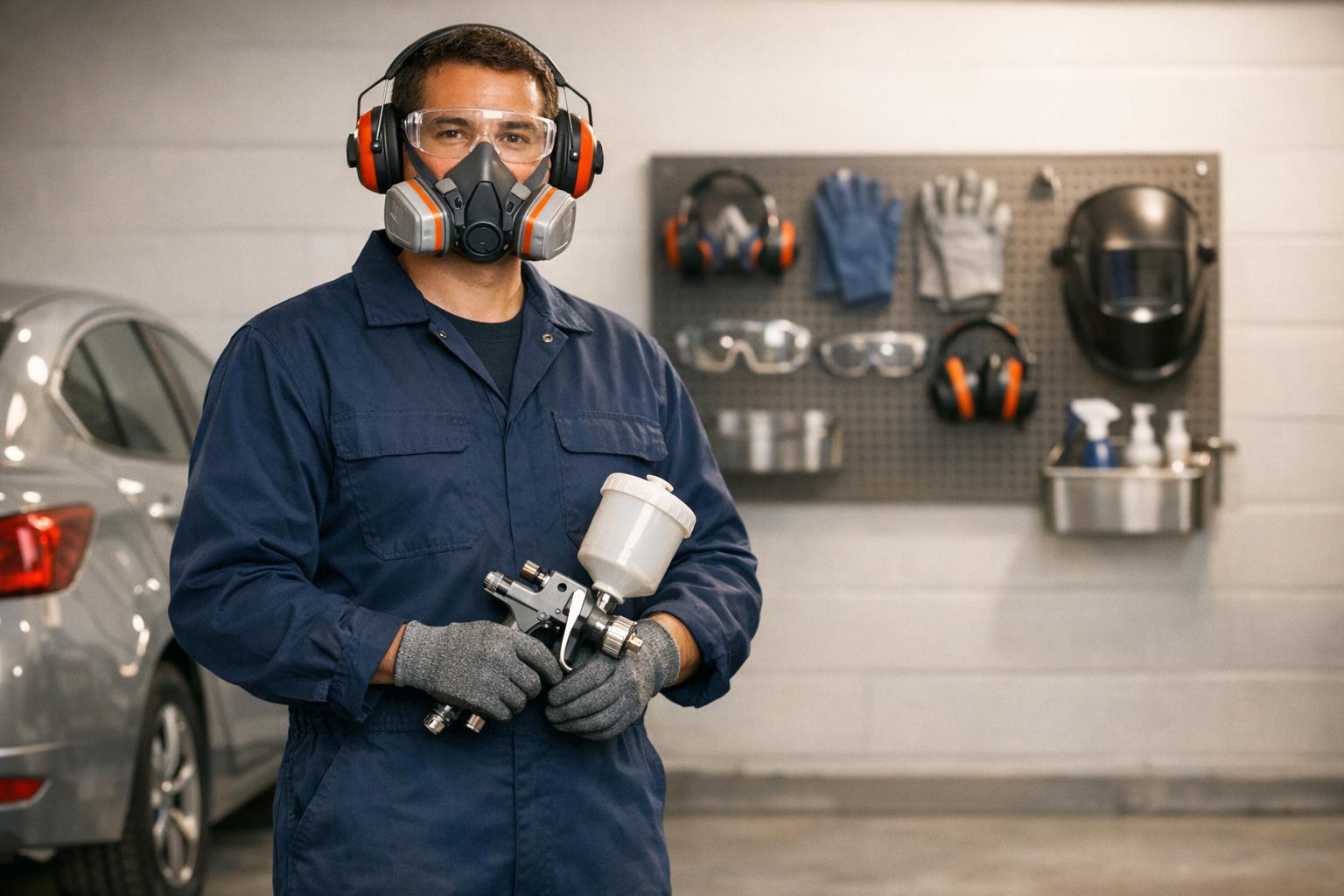
Auto body shops are hazardous environments where workers face risks like chemical exposure, flying debris, and loud noise. Personal protective equipment (PPE) is critical for safeguarding technicians from these dangers and ensuring compliance with OSHA standards. This guide covers:
Investing in PPE not only protects workers but also reduces liability, increases productivity, and supports long-term health. Read on for detailed insights into creating a safer workspace.

Auto Body Shop Respirator Types: Protection Levels and Use Cases
Auto body shops are full of hazards, from flying debris to toxic fumes. To tackle these risks, workers rely on various types of personal protective equipment (PPE). Each type of PPE is designed to address specific dangers, ensuring technicians stay safe while performing their tasks.
Technicians face risks like flying debris, chemical splashes, and UV radiation during tasks like welding, sanding, or cutting. Safety goggles and face shields are essential in these scenarios. For welders, modern helmets with curved auto-darkening filters offer a broader view, making it easier to work in tight spots. Safety glasses have also improved, featuring flexible hinges for a better fit, which encourages consistent use throughout the day.
Respiratory PPE is crucial for shielding workers from harmful substances like spray paints, clear coats, and isocyanates, which are common in automotive paints. Prolonged exposure to these chemicals can lead to respiratory issues, including work-related asthma. Depending on the task, workers can choose from a variety of respirators:
Skin contact with chemicals like solvents, degreasers, or aerosols can cause burns or absorption of harmful substances. Full-body coveralls are a must in these situations. For paint shops, low-lint, anti-static garments are recommended to avoid contaminating finishes. Advanced chemical-resistant coveralls, such as Tychem 2000, can block over 40 chemicals for up to 30 minutes and filter particles as small as 1.0 micron. Gloves are another key component - workers should use chemical-resistant gloves for tasks like painting and cleaning, while cut-resistant gloves are better suited for metalwork or assembly jobs.
High noise levels in auto body shops can lead to hearing damage over time. Tools like sanders and spray booth fans often operate at around 80 dB, while air blowers can reach 90–100 dB. Since prolonged exposure above 85 dB can cause permanent damage, earplugs and earmuffs are critical. Noise-canceling options are particularly useful when working with loud tools in confined spaces.
Protecting feet and heads is just as important. Steel-toed boots shield against heavy tools or equipment, and slip-resistant soles help prevent accidents on oily or wet floors. For tasks like buffing lower panels, kneepads provide extra support, reducing strain on the joints. These simple but effective measures ensure workers are prepared for the physical demands of their jobs.
Understanding these PPE categories lays the groundwork for proper use and maintenance, which will be explored further in the next sections.
Having the right personal protective equipment (PPE) is key to staying safe on the job. But it's not just about having the gear - it’s about using it the right way. Improper use can leave you exposed, contaminate your workspace, or even create new risks. By following recommended practices, you can maximize your protection and minimize hazards.
When putting on PPE, make sure each piece is properly positioned and doesn’t interfere with the function or coverage of other items.
When removing PPE, take a step-by-step approach to avoid spreading contaminants. Start with the most contaminated items, such as gloves, and carefully peel them off without touching your skin or clothes. For coveralls, remove them from the inside out to contain any particles or chemicals. Respirators should be removed last - loosen the straps at the back of your head before pulling it away from your face to prevent inhaling particles that may be on the surface.
Disposable PPE should never be reused, as it could be contaminated. Reusable items, like respirator masks, need to be stored in clean, dry environments away from sunlight and chemicals to avoid damage. Before each use, always check that your equipment fits well and is in good condition.
As Scott Shinn, Advanced Technical Service Specialist at 3M, explains:
"If it doesn't fit the worker, they tend not to wear it when they need to wear it, and that's where injuries can occur".
Proper fit is critical. For example, a poorly fitting respirator can allow contaminated air to bypass the seal, making it ineffective.
Respirators require a formal fit test to ensure they seal properly. This involves wearing the mask while exposed to a test agent - if you can smell or taste the agent, the fit is inadequate. Facial hair, even slight stubble, can compromise the seal, so clean-shaven skin is a must for tight-fitting respirators. Straps should be adjusted so they’re snug but not uncomfortable, and a user seal check should be done every time by covering the filters and inhaling to confirm suction.
Gloves also need to fit the task at hand. Chemical-resistant gloves should fit snugly without limiting movement, and they should cover the wrists completely. Similarly, coveralls with elastic openings at the wrists, ankles, and face help maintain a tight seal, even during movement. As Shinn points out:
"Nobody knows the hazards of the job better than the technician performing the job".
Involving workers in choosing their PPE ensures they’re comfortable with the gear and more likely to use it correctly.
Different tasks come with unique risks, so the PPE you use should match the hazards of the job.
Facilities like Franklin Auto Body in Boise, Idaho - where I-CAR GOLD CLASS-certified technicians handle diverse repairs - demonstrate how following task-specific PPE protocols not only ensures worker safety but also maintains the high-quality standards customers expect.
Even the best Personal Protective Equipment (PPE) won't perform as intended if it’s damaged or contaminated. Regular maintenance and inspections are crucial to keeping PPE functional. Tower Supplies emphasizes this point: "Proper storage of Personal Protective Equipment (PPE) helps prevent it from getting damaged. By ensuring PPE is stored securely, you can maintain its condition and effectiveness, reducing the need for frequent replacements".
Before storing PPE, make sure it’s clean and dry - leftover residues can speed up wear and tear. Ideally, store items in their original packaging in a cool, dry, and dark environment, with temperatures between 59–68 °F and humidity levels of 30–50%. A dedicated locker or cabinet works best for this purpose.
For specific types of PPE:
Plastics and reflective fabrics are particularly sensitive to sunlight and UV exposure, which can weaken their structure. To avoid this, keep hard hats and high-visibility clothing away from windows or other UV sources. For garments, fold or hang them neatly to prevent creasing that could damage reflective materials.
Proper cleaning and storage go hand in hand with regular inspections. Together, they help catch and prevent damage early.
Reusable respirators should be inspected at least once a month. Look for damage, loss of seal, or deformation in the facepiece. Hard hats need frequent checks for cracks, brittleness, or fading. Always check the stamped manufacture date to ensure they’re still within their recommended service life. If a hard hat is dropped or takes an impact, it should be replaced immediately, even if there’s no visible damage.
Here’s a quick guide for other PPE:
Routine inspections, paired with proper cleaning and storage, ensure your PPE stays dependable and ready for action when you need it most.
Auto body shops must follow strict safety regulations to protect workers from the hazards associated with collision repair and refinishing. Adhering to these rules not only ensures a safer workplace but also keeps businesses compliant with legal requirements.
Auto body repair shops operate under OSHA's General Industry standards (29 CFR 1910), which include detailed requirements for personal protective equipment (PPE). For example:
Auto body shop workers face risks such as exposure to volatile organic compounds, diisocyanates, hexavalent chromium (from spray painting), silica (from sandblasting), and metal fumes (from welding). OSHA also mandates that PPE often meets ANSI standards, and under the "Employer Payment for Personal Protective Equipment" rule, businesses are typically required to provide PPE at no cost to employees.
To stay compliant, shops should conduct thorough walkthroughs to identify chemical and physical hazards. For tasks like spray painting or sandblasting, employees must complete medical evaluations and respirator fit tests before starting work. Keeping detailed records of hazard assessments, training, and fit tests is critical for demonstrating compliance during inspections.
While OSHA sets the regulatory foundation, additional industry certifications can enhance safety practices.
The I-CAR GOLD CLASS certification is a mark of excellence in collision repair safety and training. Facilities like Franklin Auto Body in Boise, Idaho, maintain this certification by ensuring their technicians receive ongoing education on best practices, including proper PPE use and workplace safety. I-CAR training complements OSHA standards by focusing on advanced materials, repair techniques, and task-specific safety measures. Regular updates to training ensure that safety practices keep pace with evolving automotive technologies and materials.
A formal hazard assessment is a key part of maintaining compliance. This involves systematically inspecting areas like paint booths, welding stations, sanding zones, and parts storage to identify risks. Whether the hazards involve chemical exposure, noise, or impact risks, documenting them is essential. These assessments should also be updated whenever new equipment, processes, or chemicals are introduced.
Detailed record-keeping strengthens compliance efforts. Shops should log PPE training sessions, including topics covered and attendance. Respirator fit test results, with dates and specific models tested, should also be recorded. Additionally, maintaining records of PPE inspections and replacements helps manage the safety program effectively and provides evidence of compliance during OSHA inspections. Local OSHA-approved programs may have additional requirements, so verifying those is important.
Personal protective equipment (PPE) serves as the final barrier between auto body shop technicians and the many hazards they face daily. Whether it's exposure to welding fumes, paint vapors, grinding debris, or excessive noise, these risks can build up over time, impacting health and safety. Using PPE effectively isn't just about ticking off OSHA compliance boxes - it's about protecting workers' well-being and ensuring they can perform their jobs safely for years to come.
The collision repair industry has shifted from outdated practices to a more professional approach where proper safety gear is now the norm. For example, Franklin Auto Body in Boise, Idaho, exemplifies this shift with its I-CAR GOLD CLASS certification. This certification highlights their commitment to ongoing safety training and the consistent use of PPE, setting a benchmark for others in the industry.
Choosing the right PPE is a team effort. When technicians are involved in selecting gear that fits comfortably and supports their work, they're more likely to wear it consistently. Managers play a key role in reinforcing this behavior, staying visible on the shop floor, and providing positive feedback to encourage adherence to safety protocols. This hands-on approach not only ensures compliance but also fosters a safety-first mindset that appeals to younger workers who value employers that genuinely care about their health.
To maximize protection and efficiency, PPE must be part of a broader safety strategy. This includes conducting detailed hazard assessments, keeping thorough records, and exploring engineering solutions like local exhaust ventilation before relying solely on protective gear. Regular training, proper equipment maintenance, and a workplace culture that prioritizes safety all contribute to making PPE effective across operations. Investing in high-quality PPE is a small price to pay for ensuring a healthy, productive workforce in the long run.
When working with paint fumes, an airline respirator system is a great choice for handling hazardous materials like urethane paints. This type of respirator ensures you breathe clean air supplied from a remote source. For less hazardous tasks, such as general spray painting, sanding, or grinding, a particulate respirator with filters designed to trap fine particles and odors is a better fit. Always select the right respirator for the specific task and exposure level to keep yourself safe.
Personal protective equipment (PPE) in an auto body shop should be replaced immediately if it shows any signs of damage, wear, or contamination. This ensures workers are properly protected at all times. Regularly inspecting and maintaining PPE is crucial for meeting safety standards, as outlined by OSHA regulations. Keeping PPE in good condition is essential for maintaining a safe and secure workplace.
OSHA mandates maintaining records for PPE hazard assessments, PPE training documentation, and PPE inspections and maintenance. These records play a key role in ensuring that personal protective equipment is used correctly and complies with regulatory standards. Staying on top of these documents is crucial for both workplace safety and meeting OSHA requirements.
